
If you’re the one who knows where the passports are, which drawer holds the insurance cards, and how to find a birth certificate in under three minutes, a family emergency binder is about to make your life a whole lot easier. Right now, a lot of your household’s critical information lives with you. Some of it’s in a file. Some of it’s in a wallet. And some of it is still floating around in your head.
That works fine on an ordinary Tuesday. It works a lot less well when someone’s injured, a storm is moving in, there’s an evacuation order, or you just need important paperwork right now. A family emergency binder gives you one portable place for the information you might need in an everyday emergency, a medical situation, or a true disaster. Just as important, it helps other people help you when you’re not in a position to explain everything yourself. This isn’t about fear. It’s about peace of mind, and you don’t have to build the whole thing overnight. You just have to start.
The short answer
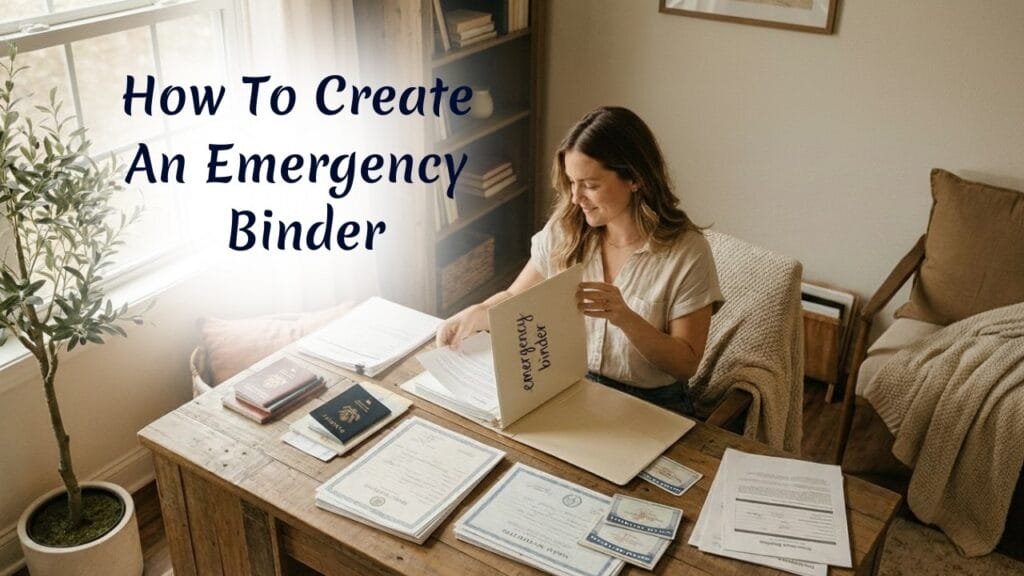
A family emergency binder is a portable paper system that holds the most important information and documents your household might need during a crisis: identity details, emergency contacts, medical information, copies of important documents, photos, and key financial and insurance records. The best binder isn’t the biggest one. It’s the one you can actually grab, carry, and use when life gets loud and your brain isn’t doing its best work.
Preparedness is just making the next hard moment easier
Emergency preparedness sounds like a big, intimidating project. For a lot of us it brings up bins, checklists, batteries, and a pile of things we keep meaning to do “someday.” But at its core, preparedness is just making the next hard moment easier. Mary and I are professional organizers, and we’ve spent years refining an emergency system that supports both families and the people trying to help them in a crisis.
Here’s a point worth sitting with: this isn’t only about worst-case scenarios. A family emergency binder helps with everyday life too. When your adult kid suddenly needs a birth certificate, when you’re filling out paperwork and need a VIN, when someone wants insurance details in a hurry, the binder saves you time and stress. So this isn’t a thing you build and hope to never touch again. It’s one you’ll actually use, which is exactly why it’s worth setting up. If the whole project feels like too much, don’t treat it as one giant task. It’s one small piece at a time. Even gathering the papers you already have into one safe, portable place puts you way ahead of where you were.
Why you need one
Two big reasons. First, your brain doesn’t work normally under stress. Second, your critical information is probably scattered across too many places.
In an emergency, people freeze. The details you know cold on a calm day can vanish when adrenaline takes over. Phone numbers, medications, addresses, policy numbers, your preferred hospital, even clear directions to your own home can suddenly feel out of reach. That’s not a personal failing. It’s just how the brain responds under pressure. A binder helps by moving the key details out of your memory and onto paper, so instead of trying to recall everything, you reach for one organized tool.
It serves the people around you, too. If you’re injured, unresponsive, overwhelmed, or away from home, someone else may need to step in fast. Your binder helps first responders, relatives, caregivers, or trusted friends understand who you are, what you need, and what matters most. And there’s the after: getting out is only part of the story. Coming back, rebuilding, filing claims, proving residency, replacing documents, all of that can be just as stressful, and the right paperwork makes those steps much smoother.
What you don’t need to do: gather every meaningful paper you’ve ever owned. Your binder isn’t a portable filing cabinet. It holds the documents and information you’re most likely to need in an emergency, plus notes about where other records live if you need them later. Think hard-to-replace, not everything and the kitchen sink.
Start with free identity and fridge cards
One of the easiest ways to start is with identity cards and fridge cards. We offer these as a free resource because they focus on the most immediate, practical information. You can grab the free first responder cards on our site.
The idea behind fridge cards is simple: first responders are often trained to check the refrigerator for emergency information. If someone comes into your home and you can’t communicate clearly, that card can hand them the details they need in seconds. I recommend putting one card for each family member in an envelope on the fridge, labeled clearly for emergency information. That way it’s there when it’s needed, but not just sitting out for casual snooping. The packet breaks into three parts: adult identity cards, minor identity cards, and pet identity cards. There are also fridge cards with medical and contact details, plus an emergency contact sheet. Basic as they sound, this information gets surprisingly hard to pull together when emotions are high and time is short. If you regularly care for grandchildren, nieces, nephews, or other kids who spend a lot of time in your home, make cards for them too. Same goes for pets and frequent visitors whose information might matter.
Filling out the adult identity card
The adult identity card fits a lot of important information on one page, which matters because a single clear page is easier to photograph, share, and use fast than a handful of scattered notes. Start with the basics, then fill in the details that would matter if someone else had to identify or advocate for you:
- A current photo
- Legal name, and the name they actually go by
- Height and weight
- Identifying marks like scars or moles
- Medications, allergies, and blood type
- Medical conditions
- Languages they know
The photo really matters. Mary points out that if an older parent wanders off or a teen takes an unauthorized walkabout, having a current picture ready is a huge help. Obvious after the fact, easy to skip in the moment. The “goes by” line is another thoughtful one. Plenty of people use a nickname, middle name, or a familiar version of their legal name, and in a stressful moment responders may get a better response from the name the person actually answers to. Languages can matter more than you’d think. As Mary notes, older adults sometimes drift back toward their first language as they age. If a responder knows someone might answer in German rather than English, that can change everything. This card is meant to speak for you when you can’t speak for yourself. That’s a good test for every line: if you couldn’t explain your situation, what would you want someone to know right away?
Kids and pets need their own cards
Children and pets need their own planning, because their needs are different and they may not be able to speak up for themselves at all. For minors, the identity card follows the same format but focuses on what would help identify and protect the child. If kids are regularly in your care, full time or just often, include them.
For pets, the card can be a real comfort in a hard moment. It might include a photo, identifying details, and practical notes like who can take temporary care of the pet if you can’t. I recommend keeping a list of trusted people who can watch your animal until you’re back. That small step prevents a lot of confusion during an evacuation or hospital stay. It also helps to put pet information where responders can find it, especially if animals in the home may need attention or containment. And don’t skip photos. Pets get separated during fires, hurricanes, and hurried departures, and a clear picture with identifying details (plus a chip number if you have it in your records) makes it much easier to prove a pet is yours.
A wallet card that travels with you
Beyond the full identity card and the fridge card, we also recommend a first responder wallet card. It’s a compact version made to be cut out, folded or sealed, and tucked into a wallet, so if something happens while you’re away from home, the key information is still on you. This one leans more heavily on medical details and emergency response info:
- Medical conditions
- Implanted devices like a pacemaker
- Preferred hospital and preferred doctor
- A medical contact name and phone number
- Religious contacts or concerns
- Where your life-saving medications are kept at home
- Whether there are pets or minors at home
That last one is especially useful. If you’re found somewhere and can’t explain your situation, the card can alert people that a child or pet may need attention back home. I’d also keep documents like a living will, DNR, or organ donor pledge together with the first responder information in that fridge envelope, so the most urgent medical papers are grouped, easy to find, and easy to hand over. The binder works best layered like this: a detailed binder at home, fridge cards for quick household access, and a wallet card for what should travel with you.
Your emergency contact list
An emergency contact list seems almost too obvious to need attention. But it becomes priceless at exactly the moment your brain decides to stop cooperating. Our version includes a sheet for emergency numbers plus prompts for what to say when you call for help. On it, put:
- Primary emergency contacts
- Local non-emergency numbers for police, fire, and medical services
- Your name and address
- Location details or landmarks
- A note on how to get into the home or building
The landmark reminder is a practical one. On a calm day, of course you know where you live. In a true emergency, giving precise directions gets hard, and reading it off a sheet beats improvising under pressure. Keep one distinction clear: if there’s immediate danger or urgent need, call 911. Non-emergency numbers are for situations that need help but aren’t immediately life-threatening. This whole section is about reducing the mental load, so you’re working from a script and a list instead of your memory.
Your master list of core documents
Once the quick-access cards are done, gather your core documents. This is where the binder becomes a real reference system. Mary and I want this to be a pared-down collection of the papers that truly matter, especially the ones that are hard to replace. You want a binder you can carry, not one that needs its own luggage allowance.
Personal documents
These establish who you are, where you live, and how you’re connected to your household: birth certificates, Social Security cards, passports, copies of driver’s licenses, a utility bill in your name, vehicle identification numbers, and car registrations. The utility bill is one most people wouldn’t think to include, but it can be critical after a disaster. A driver’s license may not show your current address; a utility bill helps prove you’re connected to that residence, which matters when officials are controlling access to a damaged area. After an evacuation, reentry gets restricted, and paperwork that proves your residency can get you home faster and with fewer headaches.
Medical documents
This section supports care decisions and helps others understand your coverage and providers: doctor names and contact info, copies of medical cards if you have them, insurance provider information, and policy details (or at least policy numbers and the company holding the policy). You won’t need full policies for every situation, but the key details should be easy to find. Knowing who covers what, and how to reach them, saves real time in a crisis.
A few mistakes to skip here: including every important paper instead of just the important ones, assuming digital copies alone are enough, forgetting to note where additional records live, and leaving key details only in your head. That digital point matters more than ever. Phones die. Power goes out. Service drops. Hospitals have dead zones. Two-factor authentication can lock you out of your accounts when your device isn’t working. A paper backup is still what saves you.
Why physical photos belong in there
Photos get their own section because they do a different job than documents. They help prove identity, relationships, ownership, and connection in ways paperwork sometimes can’t. Keep physical color photos in your binder rather than assuming your phone will always be available:
- Individual photos of each family member
- Group family photos
- Pet photos
- Home inventory photos, or a list with key images of valuable items
Family photos together are especially important. Mary explains that they help show who belongs to whom. In chaotic situations, especially when children are being moved for safety or reunification is delayed, a family photo can establish connection quickly. That might sound dramatic until you picture the reality of a fire, storm, or evacuation. In those moments, officials aren’t handing children over just because someone says “that’s my child.” They have to verify. Group photos also help if someone’s disoriented, injured, or struggling to remember details after a head injury or shock. Home inventory photos matter for a different reason: a full inventory may live elsewhere, but your binder can hold the most important images or a summary list for items that would be hard to replace or document later. If you want help with that piece, we share a separate home inventory resource.
Financial and insurance records
This section is about recovery, claims, access, and proof of ownership. If your wallet is lost or stolen, or your home is damaged and you need to start filing paperwork fast, this is where your prep pays off. Documents to consider:
- Credit and debit card numbers, plus the customer service or freeze numbers for each
- Life insurance and pet insurance information
- Vehicle titles and registrations
- Safe combinations
- Home title information
- Copies of your will, power of attorney, and trust documents
Mary makes a very practical case for recording your card contact numbers: if your wallet is stolen, the phone number on the back of the card is gone with it. Having those numbers written down elsewhere lets you start freezing accounts immediately. For insurance, keep copies of your homeowner’s and vehicle policies, especially the parts that spell out what’s covered, so you can review your coverage without logging in, calling around, or reconstructing it from memory. One thing people overlook: if you’ve done major home repairs or improvements, an itemized list helps later, particularly for proving what existed beyond the home’s original base structure. Legal papers matter too. Copies of a will, power of attorney, or trust are often enough to move necessary conversations forward. You can decide where the originals live, but copies in the binder are practical and accessible. If you’d rather work from a done-for-you framework than build all of this from scratch, we offer a full emergency binder with worksheets and guide pages.
Where to keep it and how to keep it current
Keep the binder somewhere accessible and known to your key people. Not hidden so well no one can find it. Not buried in a back closet behind the holiday wrapping paper. Somewhere practical. This feels uncomfortable at first, because a lot of us were raised to guard paperwork carefully. But here’s the realistic part: most thieves aren’t breaking in hoping to steal your organized paper binder. They’re after quick valuables like a purse, a briefcase, or a safe. If privacy worries you, use a plain or less obvious label. The bigger risk isn’t that someone studies your paperwork. It’s that no one can find it when it matters.
Digital backups are helpful, but they’re a backup, not the whole plan. Power outages, damaged devices, weak service, hospital dead zones, overloaded networks, and two-factor problems can all put digital info out of reach right when you need it. Keep the paper binder first and add a virtual backup as an extra layer. A bank safe deposit box sounds secure, but it usually adds too many barriers: the bank may be closed, the crisis may hit on a weekend, someone else may not be able to get in, and a full binder may not even fit.
Plan to review the binder at least twice a year, and hang it on trigger events so it’s easy to remember: daylight saving time changes, the kids’ first or last day of school, your auto insurance renewal, or tax season. You can also update as things come in. Get a new policy in June? Slip it in then instead of building a pile for later. Updating is almost always faster than starting over. One more tip: mark copies as copies. If a photocopy doesn’t obviously look like one, write “copy” on it or enlarge it slightly so it can’t be mistaken for a forgery attempt. That’s especially handy for ID copies and other official records.
Quick-start checklist
- Download or create identity and fridge cards
- Fill out one adult card tonight
- Make an envelope for emergency information on the fridge
- Start one emergency contact list with addresses and landmarks
- Gather your most important personal documents first
- Add medical and insurance details next
- Print physical photos of family members and pets
- Store the binder somewhere accessible
- Set two reminders a year to review and update it
You don’t have to finish every section in one sitting. A working binder with the basics helps far more than a perfect binder that only exists on your to-do list.
FAQ
What should a family emergency binder include first?
Start with identity information, emergency contacts, medical details, and copies of your most important personal documents. Those are the pieces most likely to help right away.
How often should I update it?
Review it at least twice a year, and update it whenever major documents change, like insurance policies, medications, or contact information.
Should I keep original documents in it?
Some originals may belong there, but copies are often enough. Use judgment based on what you need quick access to and what would be hard to replace.
Why do I need paper copies if everything is online?
Power outages, poor service, dead batteries, and login barriers can put digital files out of reach in an emergency. Paper is still the most reliable backup.
Where’s the best place to store it?
Somewhere accessible in your home, with trusted people knowing where it is. The goal is easy access, not perfect hiding.
Do I need separate cards for kids and pets?
Yes, if they live with you or are often in your care. Separate cards help responders and caregivers know who needs attention and what information matters for each one.
Is a utility bill really necessary?
It can help prove residency after a disaster, especially if officials are restricting access to damaged neighborhoods and your ID doesn’t show your current address.
One last thing
A family emergency binder is one of those quiet tools that does a lot of heavy lifting. It helps on ordinary days when paperwork pops up out of nowhere, and it helps on the hard days when clear thinking is in short supply. You don’t need to do this perfectly. You just need to begin. Download the free cards and build your binder one page at a time, and if you’d like a fuller walkthrough, the video is a good companion to this guide.
Want to keep learning with Mary and me? Come join the Life A-Go-Go newsletter for practical ideas, upcoming video updates, and access to our private live-session information. Keep going, friend.